DM Me Your Portfolio: The American Artists Quietly Taking Over Anime Production
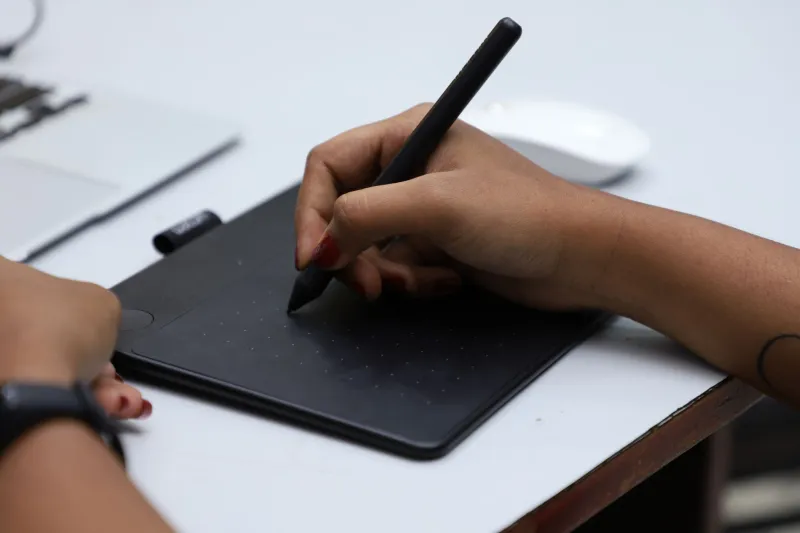
Ten years ago, the dream of an American animator working on a Japanese anime production required one very specific path: move to Japan, grind through an entry-level in-betweening job at a fraction of minimum wage, and hope you survived long enough to get promoted. The barrier to entry wasn't just talent — it was geography, language, and a visa process that didn't particularly care about your fan art folder.
That pipeline has been blown wide open, and the way it happened says a lot about where the industry is heading.
The Twitter Portfolio Era
Ask any US-based artist currently freelancing for a Japanese studio how they got the gig, and the answer is embarrassingly simple: they posted their work online and someone in Tokyo saw it.
The rise of X (formerly Twitter) as a de facto portfolio platform has flattened the industry's geography. Japanese producers and art directors now routinely scout international talent through hashtag searches, retweets from established industry figures, and DMs that would have been unthinkable a decade ago. An artist in Texas with a distinctive style and a consistent posting schedule has roughly the same discoverability as an artist in Saitama.
The kicker? Many of these artists never formally applied anywhere. The work found them.
Crowdfunding Changed the Leverage Equation
There's a second engine driving this shift: money, specifically American money going directly to creators.
Kickstarter and similar platforms have demonstrated that US audiences will fund anime-adjacent projects at scale — think of record-breaking campaigns for projects like Urusei Yatsura re-releases or original Western-produced anime pitches that cleared seven figures. That money doesn't just fund projects; it creates demand for talent on both sides of the Pacific.
Suddenly, a Japanese studio with a tight schedule and a US-based artist with a proven crowdfunding audience are natural business partners. The artist brings skill and a built-in fanbase. The studio brings production infrastructure and industry credibility. It's a trade that simply wasn't possible when the only path was relocation.
What Remote Anime Work Actually Looks Like
Let's demystify the reality, because the romantic version and the practical version are very different animals.
Most US-based contractors aren't key animating full episodes from their kitchen tables. The typical entry points are:
- Background art and layout support, where US artists trained in digital painting often slot in seamlessly
- Color scripts and finishing work for co-productions targeting Western markets
- Storyboard cleanup and localization-adjacent design on shows with international distribution baked in from day one
- Game-adjacent anime work — cutscenes, character design, and promotional art for Japanese games with Western releases
That last category is quietly becoming the biggest on-ramp. Game studios commissioning anime-style trailers and in-game cinematics don't care where you live; they care that you can hit a deadline and match the style bible. For American otaku with strong fundamentals, it's the most realistic door into the industry.
The downsides are real too. Time zone math is brutal — a 9 a.m. Tokyo deadline is 4 p.m. Pacific the previous day, which means your evenings are no longer your own. Payment structures can lag months behind delivery. And freelancing means no health insurance, no PTO, and no safety net when a project gets quietly shelved.
Is This Good for Anime's Visual Style?
Here's the debate simmering under the whole trend: when American artists start shaping anime, does it stay anime?
The purist worry is homogenization — that cross-cultural production will sand off the distinctly Japanese sensibilities that make the medium what it is. The optimist counterargument is that this has literally always been anime's story. Tezuka borrowed from Disney. Modern studios borrow from French art Nouveau, from Moebius, from American comics. Anime has never been a closed system; it's a style that metabolizes outside influence and makes it its own.
The most likely outcome is somewhere in the middle. You'll see more hybrid projects — anime-styled productions with Western writers and Japanese animation direction — and a generation of artists who code-switch between visual languages the way bilingual people switch between them verbally.
Practical Advice for Aspiring Creators
If you're sitting on a portfolio and wondering whether any of this applies to you, here's the honest checklist:
- Post consistently, not perfectly. Japanese art directors scouting internationally look for reliability and a recognizable style, not one flawless illustration.
- Learn the fundamentals before the style. Anatomy, perspective, and composition translate everywhere. Style is seasoning, not the meal.
- Follow Japanese artists you admire. The community is smaller and more connected than you think, and mutual follows actually matter.
- Get comfortable with professional email in basic Japanese. You don't need fluency — you need courtesy, and courtesy in Japanese is a skill all its own.
- Say yes to game-adjacent work. It pays better than entry-level anime, teaches production discipline, and builds the exact portfolio Japanese studios want to see.
The door is open in a way it's never been. It's just open at 2 a.m. your time, and somebody in Osaka is waiting for your reply.