Your Ears Fell in Love First: The Hidden Craftsmen Behind Anime's Most Iconic Sounds
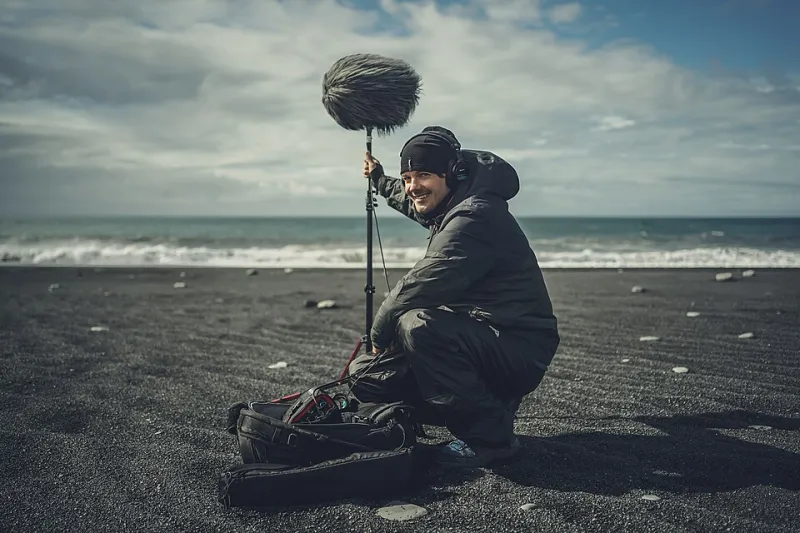
Photo: Free To Use Sounds, CC BY-SA 4.0, via Wikimedia Commons
Close your eyes and picture a samurai drawing a blade. Got it? Now, honestly — what did you actually see? If you're like most anime fans, the first thing that played in your head wasn't an image at all. It was that sound. The metallic ring, the layered shimmer, the almost musical shing that no real katana has ever made in the history of steel.
That's not an accident. That's a profession.
The Sound Doesn't Exist in Real Life
Here's the fun part: a real katana sliding out of a lacquered scabbard is nearly silent. A whisper of wood, maybe. The dramatic ring you hear in every anime from Rurouni Kenshin to Demon Slayer is a complete fabrication — usually built from a cocktail of sources like drawn-out knife scrapes, metal coat hangers, occasionally a bowed saw blade, and a lot of reverb.
Foley artists and sound designers in Japan have spent decades refining this fake sound into a language. And like any language, it has grammar. A quick, bright ring means a hero's blade. A duller, bass-heavy scrape? That's the villain. Your brain learned these rules years ago without ever being told. That's why you can identify the protagonist's sword before a single name is spoken.
Foley: The Most Invisible Job in Anime
Foley — named after Jack Foley, the American sound pioneer — is the art of performing everyday sounds in sync with picture: footsteps, clothing rustle, the clink of a teacup. In anime production, where schedules are famously brutal and sound is often recorded while the animation is still being finished, the foley team is the last crew to touch a show before it ships.
That pressure creates a specific kind of specialist. Tokyo's sound studios are often tiny operations — a handful of people, a recording booth crammed between editing suites, decades of accumulated props on shelves. A gravel pit in a bin. A bundle of straw for that specific crunch. A rack of swords, chains, and hinges that have appeared in more episodes than most voice actors.
These teams don't just make noise. They make character. The way a shy character's footsteps land softer than everyone else's. The way a transformation sequence gets a rising whoosh that feels like air being pulled into lungs. None of that is in the script.
Why American Studios Keep Calling Tokyo
Here's where it gets interesting for US audiences: Western animation houses have noticed. American productions — from streaming originals to big-budget games — have increasingly hired Japanese sound designers or licensed their techniques, because anime's sonic identity has become a global brand. When a show wants that anime feel, one shortcut is simply to hire the people who invented it.
Part of this is practical. Japanese sound studios developed workflows built for the specific demands of animation: expressing emotion through sound when budgets don't allow for fully fluid motion. In live-action, the camera does the emotional lifting. In anime, a well-placed sound can carry an entire dramatic beat. That expertise doesn't exist anywhere else at the same depth.
Think about the biggest sound moments in recent US animation — the crunch-heavy action beats, the stylized whooshes in fight scenes. You can hear the anime DNA. Your ears noticed before your brain did.
The Transformation Sequence: A Sound Design Masterclass
Let's talk about the magical girl transformation, because it's arguably the most sophisticated sound effect in all of animation. In roughly thirty seconds, you get: a rising shimmer, a rhythmic pulse synced to the character's poses, a burst of sparkle sounds, and a final resolving chime that lands exactly when the outfit does.
That's not decoration. That's a musical structure disguised as a sound effect, repeated across franchises for decades until it became ritual. It works the same way a chorus works in a pop song — the audience knows what's coming, and the pleasure is in the arrival. Sound designers tune every element: the shimmer can't be too harsh or it reads as danger, the pulse can't drag or the sequence feels slow.
When a parody show wants to joke about magical girls, they don't redraw anything. They just play the sound. That's how deep this vocabulary goes.
Your Ears Remember First
Neuroscience backs up what sound designers have always known: audio hits the emotional processing centers of the brain faster and more directly than visuals. A single sound can trigger memory and feeling before you've consciously registered what you're looking at. That's why a sword ring, a gravel crunch, or the specific squeak of a school chair can drop you back into a show you watched years ago.
So the next time you get chills when a blade clears its sheath, remember: somewhere in a small Tokyo studio, someone spent hours layering metal, reverb, and instinct to build a sound that doesn't exist in nature — just so your heart would race at exactly the right moment.
The animators get the applause. The foley artists get, well, nothing audible. But every time your ears remember anime before your eyes do, that's their signature — and it's on everything you love.