Before It Was a Studio Name: The Sacred Dance Hollywood and Hideo Kojima Can't Stop Borrowing
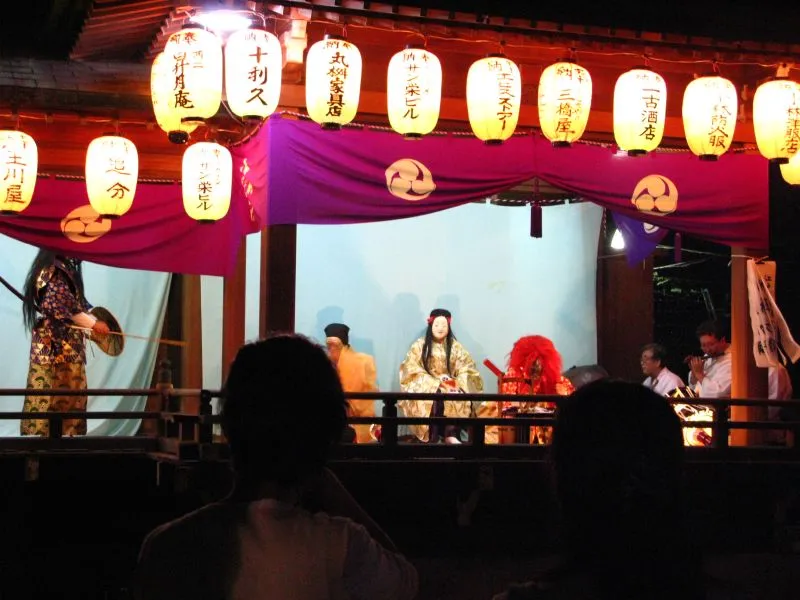
Photo: moon angel, CC BY-SA 2.0, via Wikimedia Commons
Here's an uncomfortable question we ask ourselves sometimes, usually around 2 a.m. while shipping an art milestone: we named this studio after kagura. Are we part of the problem?
If you've played Okami, you know the imagery. Amaterasu, the sun goddess, restoring life to a gray world with a celestial brush. The moment she performs the dance to make the sun rise — that's kagura, or at least a video-game translation of it. Same with the shrine maiden iconography in Kannagi, the theatrical swordplay of Naraka: Bladepoint, and a hundred background details in shows you've streamed this year.
But what actually IS kagura? And when a sacred performance becomes a vibe, who wins and who loses?
The Oldest Show in Japan
Kagura literally means "god entertainment." The mythology goes like this: the sun goddess Amaterasu hides in a cave after her brother trashes her domain, plunging the world into darkness. The other gods throw a party outside the cave — one deity performs a comedic, suggestive dance — Amaterasu peeks out to see what the fuss is, and light returns to the world.
That dance is the origin story. Every kagura performance since is, in theory, a reenactment of the trick that brought the sun back.
For over a millennium, kagura lived at Shinto shrines — solemn, ritualistic, performed for deities rather than audiences. But around the 17th century, something interesting happened: rural troupes started taking kagura on tour. Farmers learned the dances. Performances stretched overnight. Sword-waving, lion masks, acrobatics — what became known as Iwami kagura and its regional cousins turned a temple rite into traveling theater.
Folklorists sometimes describe it as Japan's original popular entertainment industry. Long before anime conventions, kagura troupes were touring, competing, and innovating to draw crowds.
Borrowing Without a Receipt
So when a modern studio borrows the name or the iconography, what's actually being borrowed?
On one hand, you could argue it's the deepest kind of tribute. Okami didn't just reference kagura — it built an entire game around the Amaterasu myth and introduced millions of Western players to Shinto aesthetics they'd never encountered. American fans who can name a single kagura dance almost certainly know it from that game.
On the other hand, there's the flattening problem. In pop culture, kagura often gets reduced to three visual cues: a shrine maiden, a fan or bell, a spinning skirt. Strip the context — the deity you're performing for, the community that sustains the troupe, the ritual calendar — and you're left with a costume. It's the difference between sampling a song and just wearing the band t-shirt.
And here's the wrinkle that makes it messier: kagura itself was never frozen in amber. The touring troupes of the Edo period were already remixing sacred material for entertainment. Folklorists generally agree that kagura has always been a living, evolving tradition that adapts to its audience. Arguably, a video game is just the newest stage.
So: Tribute or Theft?
The honest answer is that it depends on execution, and the line is thinner than anyone wants to admit.
Borrowing reads as tribute when it's specific. Okami works because it's ABOUT the mythology, not just wearing it. The dances in the game map onto real ritual gestures. That's engagement. What reads as theft is the drive-by version — a shrine maiden appears, a bell rings, the audience feels a vague sense of "Japan, but mystical," and no one involved learns anything they didn't already have from a loading screen.
There's also the credit question. Kagura troupes in places like Shimane Prefecture compete fiercely for audiences and tourism dollars. When a global franchise monetizes their aesthetic without pointing anyone back to the source, that's a real economic loss, not just a philosophical one. Anime pilgrimage tourism has proven that fans WILL travel to real locations when shows tell them where to look. Imagine if more credits rolled with a simple note: this dance tradition is real, and here's where you can see it performed.
Our Own House
We'd be hypocrites to write this without turning the lens around. We put the word Kagura on our own sign. What we can tell you is that the name was chosen as a commitment, not a costume — the idea that entertainment, done right, is a ritual that brings people together and summons something. That's the tradition we want to honor, even imperfectly.
And if this article sends even a few readers down the Iwami kagura rabbit hole, or into the mythology sections of their library? Consider the sun brought back out of the cave.
The gods, presumably, approve.