When Gods Take the Stage: The Sacred Dance Behind Your Favorite Anime
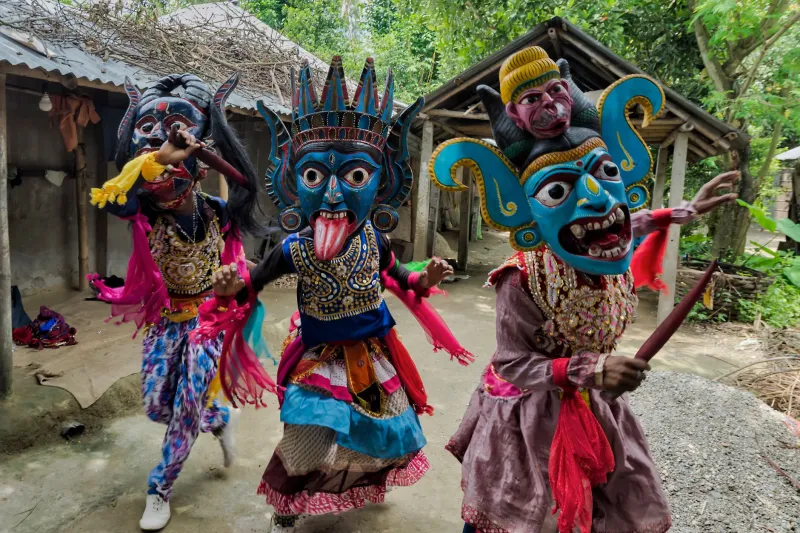
There's a moment in nearly every Kagura performance — the traditional sacred dance of Japan's Shinto shrines — where the dancer's mask catches the light just right, and for a second, you're not watching a person. You're watching something else step through.
Anime has been chasing that feeling for decades. And honestly? It keeps nailing it.
The Gods Never Left the Building
Scroll through your watchlist and count the deities. Yato, the broke delivery god of Noragami, hustling for five yen offerings. The archons of Genshin Impact, each one a walking elemental philosophy. Kamisama Kiss, Mushishi, Natsume's Book of Friends, Spirited Away — the spirits are everywhere, and they're not going anywhere.
This isn't a coincidence or a trend cycle. Shinto, Japan's indigenous faith, is animist at its core. Every river has a kami. Every ancient tree, every strange rock, every creaking old house might harbor a spirit. That worldview is a storytelling engine that never runs out of fuel — the writers don't have to invent a mythology from scratch, because the mythology is already ambient. It's baked into the culture the stories come from.
Compare that to Western fantasy, which often has to build its pantheons from the ground up. Shinto lore comes pre-installed with emotional texture: gods who are petty, gods who are lonely, gods who fade away when people stop believing in them. That last one? Devastating. Noragami built an entire emotional arc around it.
Kagura: The Original Live Performance
Here's where the site's namesake comes in. Kagura — the sacred dance itself — is one of the oldest performance traditions in Japan, supposedly originating with the sun goddess Amaterasu. The legend goes that when she hid in a cave and plunged the world into darkness, the goddess Ame-no-Uzume performed an outrageous, joyful dance that lured her back out. Light returned to the world because someone put on a show.
Think about that for a second. In Japanese mythology, entertainment literally saved the world.
That DNA runs through modern anime whether creators acknowledge it or not. The masked dancer, the ritual performance, the boundary between human and divine that gets crossed through art — you can see echoes of it in everything from Spirited Away's bathhouse to the idol industry satire of Oshi no Ko and Zombieland Saga. Performance as sacred act. The stage as shrine.
Why American Audiences Can't Get Enough
So why does this land so hard with US viewers? A few reasons, we'd argue.
First: the novelty of a different spiritual grammar. Western audiences grew up on angels, demons, and a fairly binary moral universe. Shinto lore offers something messier and, frankly, more interesting — spirits that are neither good nor evil, just powerful and particular. You don't worship the kami of the river. You respect it. You maybe leave an offering. That ambiguity feels fresh to a lot of American viewers raised on clear-cut cosmic hierarchies.
Second: the aesthetic is a cheat code. Torii gates against a sunset. Shimenawa ropes studded with paper shide. Fox masks, sacred mirrors, floating lanterns. These visuals are instantly recognizable and endlessly remixable. Genshin Impact built a multi-billion-dollar empire partly on this visual vocabulary, filtered through a fantasy lens that made it feel new rather than academic.
Third: it scratches an itch secular audiences still have. Most American anime fans aren't converting to Shinto any time soon. But the underlying emotional appeal — that the world is inhabited, that ordinary places might be extraordinary, that the old and forgotten still matter — that's universal. It's the same itch that drives the popularity of national parks, antique stores, and that one haunted lighthouse documentary you watched at 2 a.m.
The Remix Is the Point
Now, the part that matters to us as a creative studio: what do you actually do with this material?
The lazy approach is decoration. Slap a torii gate on it, add a shrine maiden, call it a day. Audiences can smell that from a mile away, and they're ruthless about it.
The good approach — the one Noragami, Mushishi, and Genshin all pull off — is to treat the mythology as a system with rules, then break those rules thoughtfully. Yato isn't a majestic god; he's a deadbeat with a cell phone. Genshin's archons are essentially government officials with divine powers and complicated feelings about retirement. The comedy and humanity come from dragging the sacred into the mundane, and the awe comes from moments when the mundane cracks open and the sacred bleeds through.
That tension — reverence played against irreverence — is the sweet spot. It's also exactly the kind of thing small studios can do well, because it costs imagination, not budget. You don't need a theatrical-grade animation pipeline to write a god who's bad with money. You need to actually care about the source material, and it shows when you don't.
The Dance Continues
Mythology that survives is mythology that gets retold. Kagura dances are still performed at shrines across Japan, some over a thousand years old, and every performance is technically a cover song. Anime, manga, and games are just the newest stage the dance has moved to.
The lesson for creators — including us — is simple: don't museum-ify the old stories. Put masks on your gods. Let them stumble. Let them be funny, broke, and heartbreakingly human right up until the moment they remind you why people built shrines in the first place.
The sun goddess came out of the cave because someone made her laugh. Remember that the next time you're tempted to take your mythology too seriously.