Quitting the Studio, Keeping the Style: How Anime Animators Are Becoming Indie Game Powerhouses

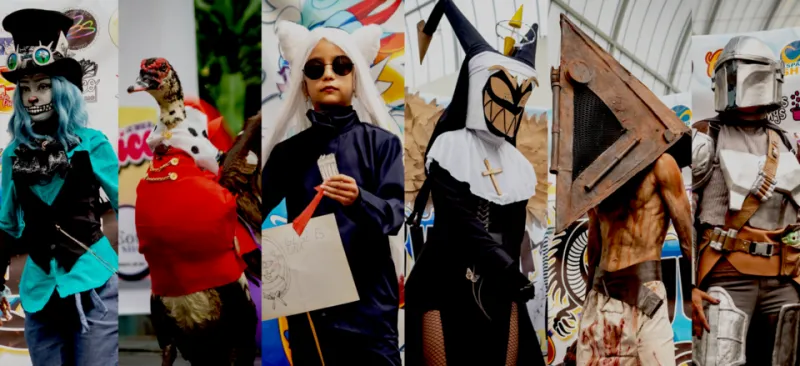
Photo: RayeChellMahela, CC BY-SA 4.0, via Wikimedia Commons
There's a moment that happens in a lot of animator careers in Tokyo. It usually arrives somewhere around year six, deep in a production schedule that hasn't seen sunlight since spring. The payslips are per-cut, the credit is buried in a scroll so long it needs its own runtime, and the artist thinks: I could do this myself.
Increasingly, they're right. And they're not just doing it — they're shipping.
The Exile Arc Is Real
If you've spent any time on Steam in the last few years, you've felt the ripple without knowing its name. Games like Touhou Luna Nights, Momodora, Deemo, and the ever-expanding constellation of doujin-style action titles share a specific DNA: frame-perfect 2D animation, anime character design with actual acting in it, and a polish level that used to be the exclusive territory of full studio productions.
That's not a coincidence. A meaningful chunk of these games are made by people who trained in anime production — in-betweeners, key animators, effects artists — who took the skills the industry taught them and pointed them somewhere with better margins and, crucially, their own name on the box.
The economics explain the exodus. Japanese animators, especially early in their careers, are famously underpaid — often earning less than a part-time convenience store shift for work that demands years of training. Meanwhile, a solo doujin game with a strong demo can pull six figures at a Comiket booth and then again on Steam, in USD, from a Western audience that doesn't care how many cuts you animated on some seasonal show in 2019.
Why Animators Make Dangerous Game Devs
Here's the part most game industry commentary misses: an animator who learns to code isn't just an artist with a new tool. They bring a completely different instinct to game feel.
Animation training teaches you about timing as emotion — the difference between three frames and five frames of anticipation before a sword swing. Most indie devs learn squash-and-stretch from a YouTube tutorial. An anime veteran feels it. That's why the best of these games — think the weight behind every dash in Touhou Luna Nights or the absurdly expressive sprite work coming out of small circles like the Touhou fan scene — feel alive in a way that budget can't buy.
There's also a workflow advantage. Anime production is, at its heart, a pipeline for producing enormous volumes of consistent 2D art under brutal deadlines. Someone who survived in-betweens on a two-cour series can absolutely handle a character sprite sheet with 40 directional states without blinking.
I spoke — via email, translated through a mutual friend — with a hybrid artist-programmer who spent eight years in anime effects work before going solo. Her framing stuck with me: "In the studio, I animated what the storyboard told me to feel. In my game, I decide what the player feels. It's the same skill. It's a completely different life."
The Doujin Scene Was the Incubator All Along
None of this came out of nowhere. Japan's doujin scene — the self-published fan and original work economy built around Comiket and events like Reitaisai — has spent three decades functioning as an informal R&D lab. Developers could iterate on mechanics, art styles, and audience taste with near-zero gatekeeping, selling small runs of physical discs to the most devoted early adopters on Earth.
Steam changed the math. Suddenly the path wasn't doujin disc → cult following → maybe a publisher, it was doujin disc → global storefront → rent money. Titles that would have sold 2,000 copies at a convention hall in Osaka in 2008 can now clear 200,000 units from a bedroom in Saitama.
What's genuinely new is the animator influx specifically. The previous generation of doujin legends skewed toward programmers and illustrators. Today's wave includes people who can make a character move like a TV production can — and players have noticed, even if they can't articulate why these games look different from the pixel-art norm.
What This Means for Anime Aesthetics
So where is the anime look headed? Watch the games, not the seasonal charts.
Solo devs have no committee. No production committee, no sponsor mandates, no merchandising department insisting the heroine's design be toyetic. When an animator-programmer decides a game's entire visual identity, you get bolder experiments: painterly backgrounds that would terrify a TV schedule, character animation pushed past what broadcast standards allow, effects work that treats every spell cast as a 300-hour money shot because the dev only needs to make it work at 60fps, not 24.
There's also a feedback loop forming. Anime studios, perpetually hungry for fresh talent and new visual languages, are starting to notice the doujin-to-Steam crowd. Some animators now run a deliberate two-track career — contract work for the industry credibility, solo games for the actual income and creative control. Others get hired back into anime at higher rates because their games function as the world's most convincing portfolio.
The pipeline runs both ways now. And the aesthetic cross-pollination is already visible in how modern anime openings borrow from game UI, how indie games adopt anime's color-script thinking, and how audiences on both sides of the Pacific have stopped drawing hard lines between the mediums.
The American Angle
For US players, this wave is arriving at the perfect moment. The indie scene here spent a decade celebrating pixel art and minimalist aesthetics — beautiful work, but stylistically narrow. Games made by trained anime animators offer something the Western indie space genuinely lacked: hand-drawn 2D movement at TV-production quality, made by one or two people, priced like a sandwich.
Stateside fans have responded accordingly. The Steam wishlists, the convention booths at Anime Expo and Sakura-Con, the speedrun communities forming around tight doujin action games — American audiences are effectively funding the next generation of Japanese animation talent, one $15 purchase at a time.
The anime industry's labor problems won't be fixed by a wave of indie games. But something interesting is happening in the escape hatches: the artists who leave aren't leaving the craft. They're taking it somewhere it can breathe.
And honestly? The games are only getting started.