Why Your Favorite Character's Eyes Do All the Talking: A Field Guide to Anime Face Engineering
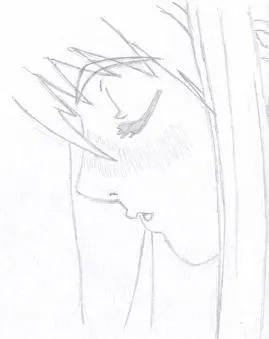
Photo: S&T Kawaii Love, CC BY-SA 3.0, via Wikimedia Commons
Scroll through your feed for thirty seconds and you'll spot them: speed-draw videos where an artist whips up a character from nothing, thousands of comments flooding in with the same energy as a crowd watching a street magician. It's mesmerizing. But here's the thing most viewers miss — professional anime character design isn't about drawing a pretty face. It's about engineering one.
Every wide-eyed protagonist and smug rival you've ever obsessed over started as a set of deliberate, almost mathematical decisions. And those decisions determine whether a franchise lives, dies, or sells a million acrylic standees.
The Eyes Have It (Literally, Everything)
In Western animation, personality often lives in the body — think of how a Pixar character slouches or struts. Anime flips that equation. The face is the story.
Designers talk about eye shapes the way a sommelier talks about wine. Large, round irises with multiple highlight dots? That's your earnest, open-hearted lead — the type who'd give their lunch to a stranger and then apologize for it. Narrow, sharp eyes with minimal highlights signal calculation, competence, or outright menace. Drooping outer corners (the tareme look) read as gentle and approachable, while upward-tilted tsurime eyes telegraph confidence with a side of attitude.
None of this is accidental. A character designer at a mid-size studio once described the process to us like casting a play: "Before the character speaks, the audience has already decided whether to trust them. My job is to rig that vote."
It's why you can pause almost any anime frame, cover the outfit, and still guess the archetype. The eyes already told you.
The Silhouette Test: The $10 Million Doodle
Here's a party trick used in basically every design room in Tokyo: draw the character as a solid black shape. No eyes, no details — just the outline. If you can't identify them instantly, the design isn't done.
This is why hair does so much heavy lifting. Spiky gravity-defying messes, twin tails with ribbon anchors, that one ahoge (the single antenna cowlick) sticking up like a mood indicator — these aren't fashion choices. They're branding. A silhouette that reads instantly is a silhouette that reads on a phone case, a sticker, a convention banner in the Los Angeles Convention Center hall, or a Funko-adjacent figure on a Target shelf in Ohio.
Industry folks are blunt about the stakes. A character with a muddled silhouette is a merchandising liability. One production insider told us that a single redesign of a heroine's hair — adding a distinctive asymmetric bang — was directly credited with a noticeable bump in goods pre-orders. "The fans called it a glow-up," they said. "It was really a logo change."
The Model Sheet Is the Real Contract
When a design locks, it gets formalized into a settei sheet — the character model sheet that every animator, keyframe artist, and merch illustrator downstream must obey. It's the constitution of the character: exact eye proportions, color swatches with lighting variants, the specific angle of that hair part, how the outfit folds.
This sheet is why your favorite character looks identical whether drawn by a sleep-deprived freelancer on episode 9 or the character's original designer doing a commemorative illustration. It's also why deviations spark fandom meltdowns. When an off-model frame goes viral on Twitter/X, what fans are really catching is a break in the contract.
For aspiring artists, this is the part tutorials rarely mention. The glamour is in the concept sketch. The career is in the discipline of the model sheet.
Why American Artists Are Obsessed (And Learning Fast)
There's a reason anime-style art dominates tutorial content on TikTok, YouTube, and Instagram here in the US. The system is learnable. Unlike the vague "just practice anatomy" advice of traditional Western instruction, anime design comes with observable, nameable rules — eye vocabulary, silhouette logic, color-coding conventions where hair color doubles as personality shorthand (red for passionate, blue for composed, pink for trouble).
American artists coming up through fandom art scenes have gotten startlingly good at reverse-engineering these rules. Some have crossed over into actual production — a trend we've covered before — and they bring a hybrid instinct: anime facial language with Western graphic-design sensibilities about shape language and branding.
That hybrid is increasingly valuable. Streaming has globalized the audience, and a character needs to land in Tokyo and Tulsa simultaneously.
The Takeaway for Your Own Sketchbook
If you're drawing characters in a Notes app sketchbook or a Wacom tablet in your dorm, steal the professionals' checklist:
- Draw the silhouette first. If it doesn't read as a black shape, iterate.
- Give the eyes a job. Decide what one emotion your character's eyes should broadcast before they speak.
- Limit the palette. Three or four colors, assigned meaning.
- One weird thing. Every iconic design has a single oddity — the ahoge, the eyepatch, the asymmetrical bang. Your weird thing is your trademark.
Character design looks like magic from the outside. Up close, it's closer to architecture — load-bearing choices stacked with intention, all invisible until someone draws your character wrong and a million fans notice at once.
That's not luck. That's a cookbook, and now you know it exists.