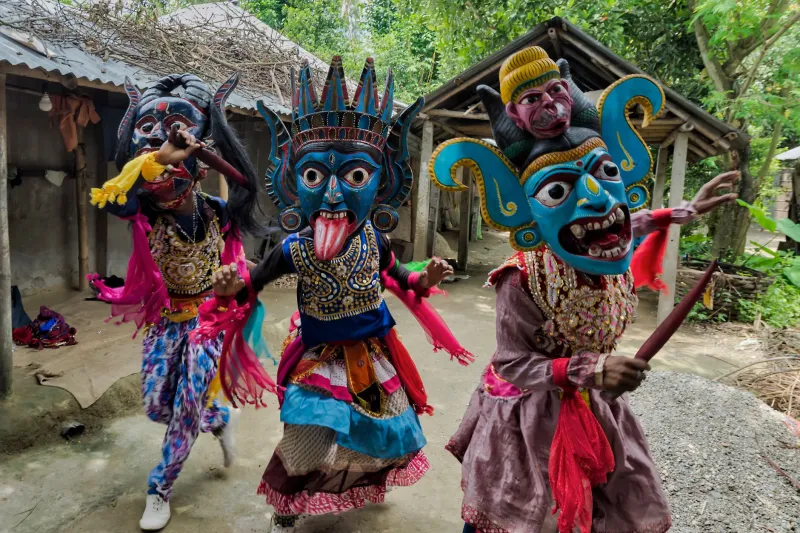
The Dance You Never Knew You Were Watching: Kagura Rituals Hidden Inside Your Favorite Games
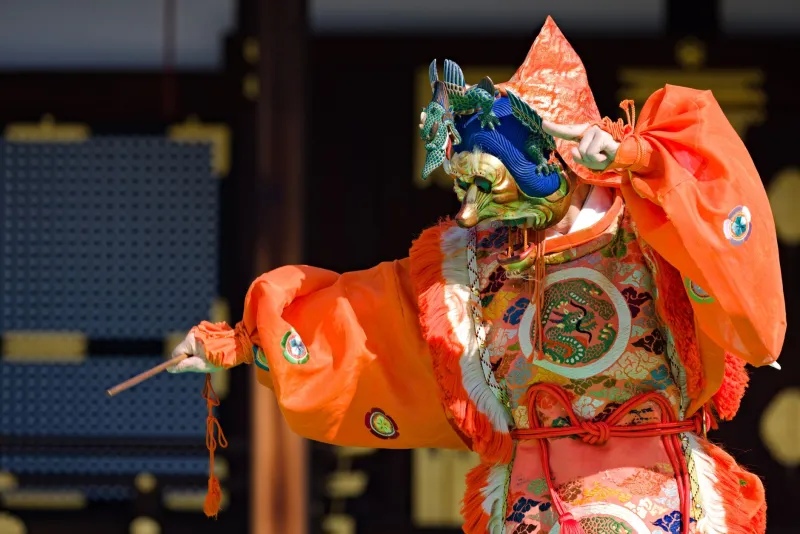
You've probably button-mashed your way through a shrine without giving it a second thought. The paper streamers fluttering from the ropes. The mirror resting on its wooden stand. The dancer in the mask moving with just a little too much intention to be background decoration.
Here's the thing: that's not set dressing. That's kagura — a ritual performance tradition stretching back over a thousand years — and it's woven into the DNA of games you've played a hundred times.
What Even Is Kagura, Though?
Quick primer for the folks who know the word only as a character name. Kagura (神楽, literally "god entertainment") is a class of Shinto ritual dance performed to honor kami — the spirits and deities of the Shinto faith. The oldest origin story is delightfully dramatic: the sun goddess Amaterasu hid in a cave after her brother threw a tantrum, plunging the world into darkness. To lure her out, the goddess Ame-no-Uzume performed an outrageous dance on an overturned tub, the gods laughed, and light returned to the world.
That myth — dance as divine spectacle, performance as a bridge between human and sacred — became the blueprint. By the Edo period, kagura had evolved into semi-theatrical stage performances with ornate masks, drum-driven rhythms, and traveling troupes. It was entertainment and worship in the same breath.
Sound like anything you know? A masked performer whose dance channels something otherworldly? Yeah. Games have been running with that for decades.
The Shrine Maiden as Protagonist Archetype
The miko — shrine maiden — might be the most recognizable Japanese figure in all of gaming. Red hakama, white top, broom or bow in hand. But the reason she works so well as a hero isn't just the outfit.
In Shinto tradition, the miko was historically a spiritual medium, someone who could channel the divine. That makes her the perfect narrative device: she stands at the boundary between the ordinary world and the supernatural one. Games love a character who can walk between worlds.
Reimu Hakurei of the Touhou Project is the purest example — a miko who resolves supernatural incidents because, well, that's literally her job description. The series is so saturated with shrine culture that its signature danmaku battles feel like ritualized duels: formalized, performative, staged. Even the spell card system has a ceremonial logic to it. You're not just fighting; you're participating in a rite with rules.
And once you see it, you can't unsee it. Kagome in Inuyasha, the shrine-heavy worlds of Okami (which, to be fair, wears its Shinto heart entirely on its sleeve), the whole aesthetic vocabulary of games like Ghost of Tsushima when it leans into shrine encounters. The imagery migrated from religion to folklore to pop culture, and now it's a global visual shorthand.
Boss Fights as Sacred Performance
Now here's where it gets interesting. Some of gaming's most memorable boss encounters aren't just fights — they're staged like performances, complete with masks, music, and choreography that echoes kagura's structure.
Think about what kagura actually looks like on stage: a raised platform, an audience, a dancer in a mask whose movements tell a story, drum beats marking each phase of the dance. Now think about a great boss arena. Elevated space. You as the audience and the participant. A masked or robed opponent whose attack patterns come in phases, each one a new movement of the piece.
FromSoftware has built entire boss design philosophies around this feeling. Encounters that begin with a bow. Opponents who dance more than they fight. The duel in Sekiro against the Corrupted Monk or the way sword-saint bosses move with ritualized precision — it reads less like combat and more like sacred theater where you've been handed a role.
Even the masks themselves carry weight. Kagura masks represent gods, demons, old women, laughing men. When a game designer puts a mask on a boss, they're borrowing a visual grammar that says: this is a vessel. Something else is speaking through it. That's why masked bosses hit different. Your brain, primed by a century of Japanese folklore bleeding into media, understands the assignment even if you've never heard the word "kagura."
Why This Matters to Players Who Just Like Cool Stuff
Look, nobody's saying you need a theology degree to enjoy slicing through a masked swordsman at 2 a.m. But there's a real payoff in knowing the vocabulary. When you understand that the paper streamers (shide) mark a space as sacred, that the rope they hang from (shimenawa) is a boundary between pure and impure, that a dance in a game might be a deliberate echo of a ritual meant to summon or banish a god — the game gets deeper. The art direction stops being "pretty" and starts being articulate.
It also explains why these motifs traveled so well. American players don't need a translator for a shrine maiden with a bow. The visual language did the work decades ago, one game at a time, until it became as recognizable as the western fantasy tropes we grew up on.
The Dance Continues
There's something fitting about the whole thing. Kagura began as a performance for the gods. Its modern descendants — danmaku bullet patterns, choreographed boss duels, masked dancers in dark fantasy arenas — are performances for us. The stage changed. The audience changed. The impulse, entertainment as something almost sacred, never did.
So next time a boss bows before drawing their blade, or a shrine maiden sweeps a temple floor before the world ends, take a second. You're not just watching a cutscene. You're watching a thousand-year-old dance, still going strong, one save file at a time.