One Bowl of Ramen, Please: How a Single Anime Meal Scene Can Put a Japanese Town on the Map
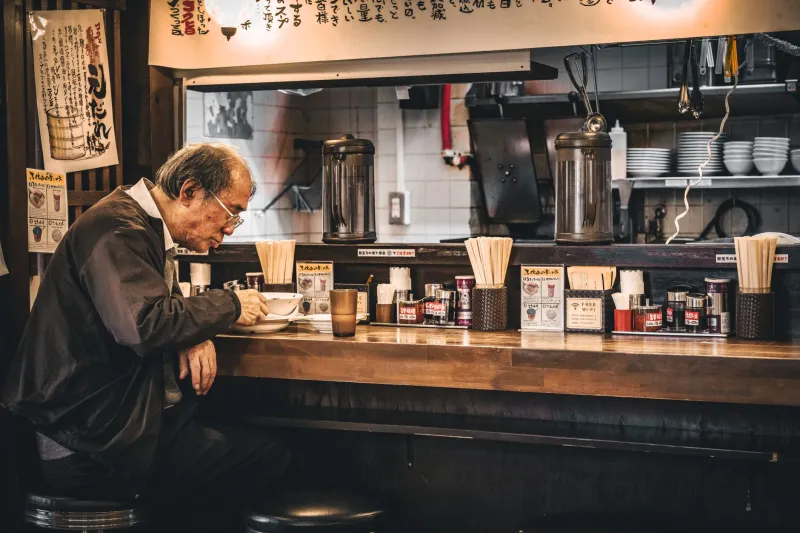
There's a specific moment every anime fan knows. The camera pushes in on a bowl of ramen — steam curling in perfect spirals, chashu glistening under impossibly warm lighting, the first slurp followed by an exaggerated gasp of joy. Your stomach growls. You pause the episode. And somewhere in the back of your brain, a thought takes root: I need to eat that. In that place. For real.
Congratulations — you've just been drafted into one of Japan's most quietly effective tourism machines.
The Pilgrimage Nobody Planned
The Japanese call it seichi junrei — literally "pilgrimage to sacred ground." The term originally applied to visits to religious sites, but anime fans repurposed it years ago for trips to real-world locations featured in their favorite shows. And while most pilgrimage talk centers on the shrine from Your Name or the staircases of Suzume, food has become the stickiest motivation of all.
Here's why: a background building is a photo op. A meal is an experience. You can stand where a character stood and feel a flicker of connection. But sitting down in the actual shop that inspired a legendary noodle scene, ordering what they ordered, tasting what the animators spent weeks rendering? That's participation, not observation.
Small Towns, Big Paydays
The economics here are wild when you zoom out. Rural Japan has been fighting population decline for decades, and local governments have noticed that a single well-placed anime appearance can do what a million-dollar ad campaign can't.
Take the pattern that repeats across the country: a regional specialty — say, a particular style of udon in Kagawa or unagi in a river town in Shizuoka — gets featured in a popular series. The studio does its homework, visits the shop, sketches the counter, captures the owner's mannerisms. The episode airs. Within weeks, fans start showing up with screenshots in hand.
Shop owners have learned to lean in. Some display framed fan art. Others offer a "menu item as seen in the show," and the smartest ones keep a guestbook that has become, functionally, a passport stamped by otaku from forty countries. One fan we spoke to — a software developer from Seattle — described planning three days of a two-week Japan trip entirely around a breakfast scene from a slice-of-life series. "My friends thought I was kidding," she told us. "I was not kidding. The tamagoyaki tasted like the animation looked. I cried a little. No regrets."
The Screenshot Economy
What makes food pilgrimage different from other anime tourism is its built-in social proof. Nobody posts a photo of a random street corner and gets 40,000 likes. Everybody posts the bowl. The meal is the content — visually iconic by design, because the animators made it that way on purpose.
And that's the part most people miss: this isn't accidental. Food in anime is drawn with an intensity that borders on propaganda. Studios employ artists who specialize exclusively in food, and the "money shot" of a perfectly composed meal can take longer to animate than an action sequence. Every highlight on the broth, every wobble of an egg yolk — that's deliberate seduction. The tourism is downstream of craft.
America Catches On
Meanwhile, the feedback loop has crossed the Pacific. Restaurants in the US — from LA's Sawtelle corridor to anime-themed cafés in New York — have started treating anime food presentation as a legitimate culinary aesthetic. We're talking oversized, camera-first plating; broths served in bowls that look lifted straight from a keyframe; menus with episode-style naming conventions. One ramen shop in California reportedly saw a sales spike after customers realized their signature bowl "looked like the one from the show."
It's cosplay for cuisine, and it works because the visual language is already deeply familiar to millennials and Gen Z diners raised on late-night anime marathons.
Should Studios Get Credit as Tourism Boards?
Here's the uncomfortable question for the industry: studios are generating enormous tourism value for regions and restaurants, and they're largely not seeing a cut. Some prefectures have started formal partnerships with production committees, offering location support and promotion in exchange for official collaboration. Others are watching from the sidelines, hoping their town becomes the next viral meal.
Either way, the lesson stands: never underestimate the power of a well-drawn bowl of noodles. Somewhere out there, an animator is spending sixty hours on a four-second dumpling shot, unaware that they're about to redirect thousands of airline tickets to a small shop on a side street in Gunma.
Imagination becomes animation. And apparently, animation becomes dinner reservations.
Planning your own food pilgrimage? Drop your dream anime meal in the comments — and check back for our upcoming guide to building a seichi junrei itinerary around your watchlist.