Mascots, Merch, and Missed Opportunities: The Real Reason Some Studio Characters Become Legends
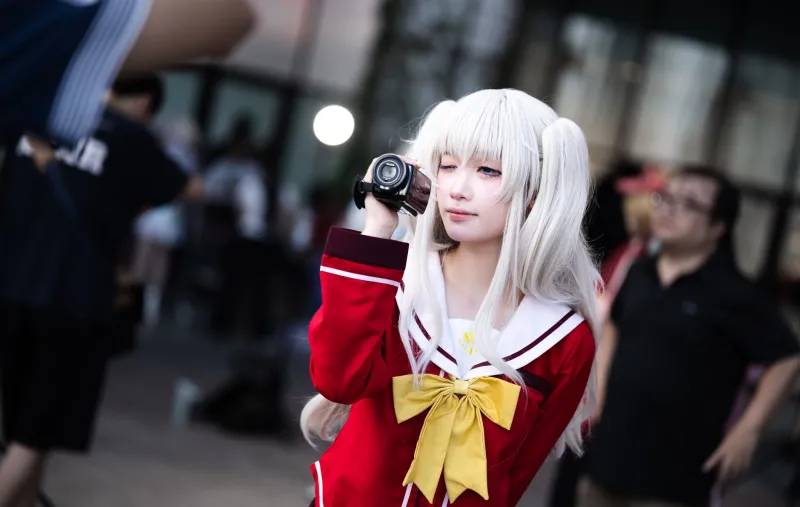
Here's a fun party trick for your next anime convention: ask ten fans to name their favorite animation studio mascot, then count how many answers are Kyoto Animation characters. The ratio will be brutal.
Studio mascots are everywhere in the anime industry, and honestly, we get the appeal. A recurring face gives a studio a human (or humanoid) anchor in a business where the actual product is invisible — you can't put "storyboarding pipeline" on a t-shirt. But after watching the mascot marketing wars play out across Twitter, convention booths, and limited-edition ita-bags, we've come to a conclusion that might sting: most studio mascots fail because they have nothing to do with the studio.
The Mascot Industrial Complex
The logic goes something like this: cute character plus merchandise equals passive revenue. Studios see the success of regional yuru-chara (Japan's beloved municipal mascots like Kumamon) and figure the formula transfers. It doesn't.
Kumamon works because Kumamon is Kumamon — a bear representing a real place, with a real personality, doing real things. A studio mascot designed by committee in a Tuesday marketing meeting has no such foundation. It's a skin with no game behind it.
What Actually Works: DNA Over Design
The mascots that endure share one trait: they embody what the studio is actually known for. When the character and the craft align, fans don't just recognize the mascot — they feel something about the studio every time they see it. That emotional transfer is the entire ballgame.
Think of it this way: a mascot is a promise. If your studio is famous for lush, painterly backgrounds, a mascot rendered in flat corporate clip-art breaks the promise. If you're known for high-octane action, a mascot that's pure moe fluff signals confusion. Fans notice. Fans always notice.
Five Studios That Got It Right
Kyoto Animation — The gold standard. Their characters appear in works that showcase the studio's signature warmth and detail, so loving them feels like loving the studio itself. The mascot isn't separate from the brand; it's a distillation of it.
Trigger — Less a mascot than a whole visual philosophy. Trigger's in-house style is so distinctive that even their logo animations feel like characters. When your studio identity is "maximum energy," everything with a face becomes a mascot.
Ghibli — Totoro might be the most successful mascot in animation history, full stop. And crucially, Totoro exists inside a film that demonstrates everything Ghibli stands for. The mascot predates the marketing department.
Sanrio-adjacent studios and character-first houses — When the character IS the business, the mascot can't fail, because it's not supporting the brand. It is the brand. Different game, different rules.
Small studios with one signature character — The scrappy underdog whose lone mascot doubles as their entire portfolio. It works because it's honest: this character represents everything we've made.
Five That Embarrassingly Didn't
We'll be gentler than the studios deserve, but the pattern is recognizable:
-
The stock moe girl — Generic twin-tails, generic outfit, generic smile. Designed to be everything, means nothing. You've already forgotten her.
-
The mascot that contradicts the catalog — A studio known for grim psychological thrillers suddenly pushing a pastel chibi? The dissonance reads as desperation, not charm.
-
The one-campaign wonder — Debuted with fanfare at an event, appeared on exactly one merch run, never seen again. Mascots need continuity to accumulate meaning.
-
The mascot with no story — No name lore, no personality, no world. Fans can't love a PNG. They need a character.
-
The forced Twitter celebrity — An account posting "good morning! ☀️" in broken casual English does not a brand ambassador make. Engagement-bait is not personality.
The Uncomfortable Truth
Here's our hot take, delivered with love: a mascot can't manufacture identity. It can only express one. Studios that succeed with mascots succeed because there was already something true to express — a style, a philosophy, a feeling their work reliably delivers.
For everyone else, the mascot is a costume worn over an empty room. And American fans, who've spent decades developing finely-tuned radar for authenticity in Japanese pop culture, can smell the vacancy instantly.
So if you're a studio reading this (hey, dream big): before commissioning your mascot, ask what your studio actually stands for. If the answer takes longer than five seconds, you don't need a mascot yet. You need a reason.
And if you're a fan? Support the studios whose mascots feel earned. That's a vote for the kind of industry you want.