Watercolor Skies and Cluttered Bedrooms: The Painters Who Tell Your Favorite Anime's Story Without Saying a Word
Here's a party trick for your next watch party: pause any anime scene during a quiet dialogue moment and cover the characters with your hand. What's left? A cracked plaster wall, a rusted bicycle leaning against a telephone pole, laundry strung across a narrow alley. You just learned more about that story in three seconds of frozen background than the characters will tell you in three minutes of talking.
That's not an accident. That's a profession.
The Department Nobody Thanks at the Oscars
In anime production, background art — called haikei — is its own department, staffed by painters who rarely get credited in the marketing and almost never get interviewed in the fun, glossy magazine features. The character designers get the art books. The animation directors get the fan adoration. The background artists get, at best, a name in the credits scrolling past while everyone's already on Discord.
And yet, ask anyone who's worked in the industry and they'll tell you the same thing: the background sets the emotional temperature of every single shot. It's the difference between a breakup scene that wrecks you and one that just... happens.
Think about it in American terms. Imagine The Last of Us with brightly lit, cheerful environments. Same dialogue, same performances — completely different show. Anime background painters are doing that work every day, frame by painted frame, and doing it in watercolor, gouache, and increasingly, digital paint that mimics both.
One Painting, Four Stories at Once
The best way to understand background art is to break down what a single painted backdrop actually communicates before the camera moves or anyone speaks:
Time of day and season. A hazy orange gradient bleeding into purple? Late summer evening, and everyone involved is about to make a decision they'll regret. Snow piled on power lines with a gray-white sky? Emotional hibernation incoming.
Class and geography. Is the bedroom cluttered with manga stacks and a cheap electric fan, or minimal with designer furniture and a window overlooking the city? You know exactly whose house this is, what their parents do, and how tight money is — no exposition required.
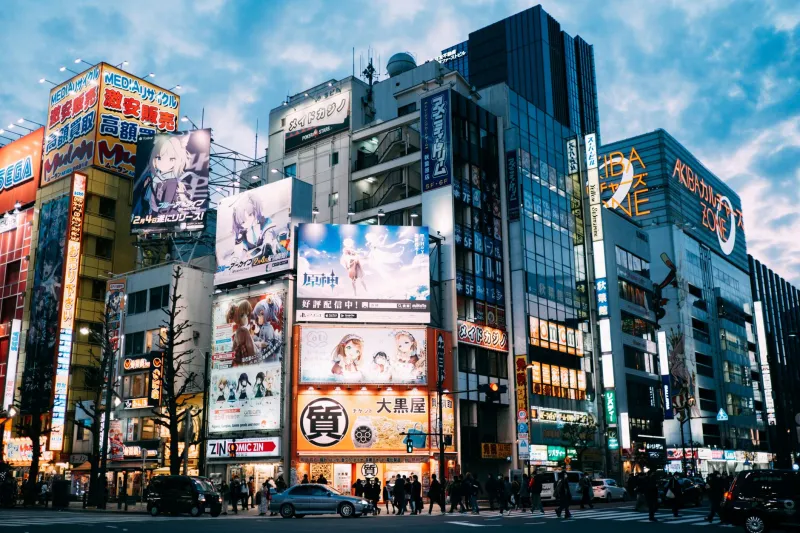
Emotional weather. This is the big one. Rain-slicked streets reflecting neon aren't just pretty; they're telling you the character's interior state when the character themselves can't articulate it. When a background painter drenches a street in that specific wet-asphalt sheen, the scene's sadness is already loaded before the first tear falls.
Nostalgia — or the lack of it. Those impossibly blue skies with towering cumulus clouds? That's a very specific, idealized summer that probably never existed but everyone remembers anyway. It's the visual equivalent of a synthwave track, and it's why so many of us feel homesick for places we've never been.
The Masters of the Invisible
Every era of anime has its legendary background artists, even if casual fans couldn't pick their work out of a lineup — which is exactly the point. The craft is designed to be felt, not noticed.
Studio Ghibli's backgrounds, largely built on the foundation laid by artists like Kazuo Oga, became so iconic that entire tourism boards have leaned into the 'Ghibli scenery' effect. The watercolor forests and painted meadows don't just sit behind the characters — they argue that the natural world is a character worth protecting, which is half the studio's entire thematic project.
Then there's the urban school. The rain-and-neon cityscapes that defined a generation of cyberpunk anime — and, famously, influenced Hollywood heavyweights — came from background painters obsessing over how light behaves on wet surfaces at 2 a.m. That's not set design. That's mood science.
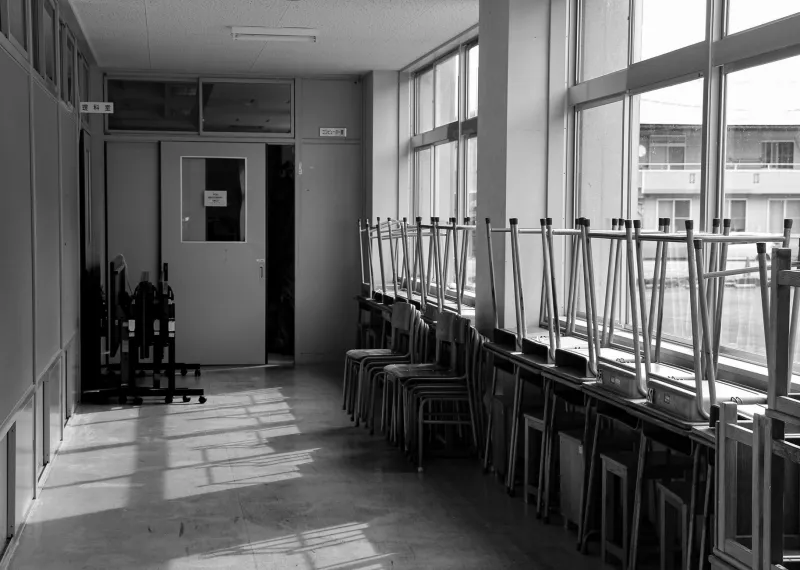
More recently, studios like Kyoto Animation and ufotable have pushed backgrounds toward a hyper-detailed lushness, where light filters through leaves in ways that make ordinary school hallways feel sacred. Meanwhile, teams like the background specialists at Studio Pablo have painted the backdrops for hundreds of series — the invisible hands behind half the shows on your seasonal watchlist.
The Bedroom Test
Want to spot great background storytelling on your own? Try what I call the bedroom test. The next time an anime shows you a character's room, freeze it and inventory everything:
- Is the bed made? (Discipline, or a life held together.)
- What's on the walls? (Aspirations, obsessions, denial.)
- Is there a second pillow? (You didn't need to be told anyone visits.)
- How old is the electronics? (Money, or the lack of it.)
A great background painter plants these details like a novelist plants foreshadowing. The cluttered desk with a half-finished model kit tells you this kid starts things he can't finish — three episodes before the plot proves it.
Digital Doesn't Mean Soulless
There's a recurring anxiety among fans that the shift from hand-painted watercolor boards to digital backgrounds has drained anime of warmth. Having dug through side-by-side comparisons, I'd argue the opposite: the tools changed, the obsession didn't.
Digital painters now layer textures scanned from actual paper, replicate gouache brush behavior, and light scenes with a precision the old guard could only dream about. What has changed is volume — modern productions demand more painted real estate, faster, which is why the truly great background work stands out even more. When a painter gets the time to nail a single shot, you can feel every minute of labor in it.
Start Watching the Walls
The next time an anime makes you cry and you can't quite explain why, rewind. Chances are the sky was a certain shade of blue, the streetlight was flickering at a certain angle, and someone painted that on purpose — knowing full well you'd never consciously see it.
Background artists are anime's quietest storytellers, and honestly, that might be the most skilled kind of storytelling there is: moving an audience so completely that they walk away crediting someone else. So here's your homework. Next credits sequence, don't skip. Somewhere in that scroll is a painter who just made you feel something you can't name.
They'd never ask for the thanks. But they've earned it.